
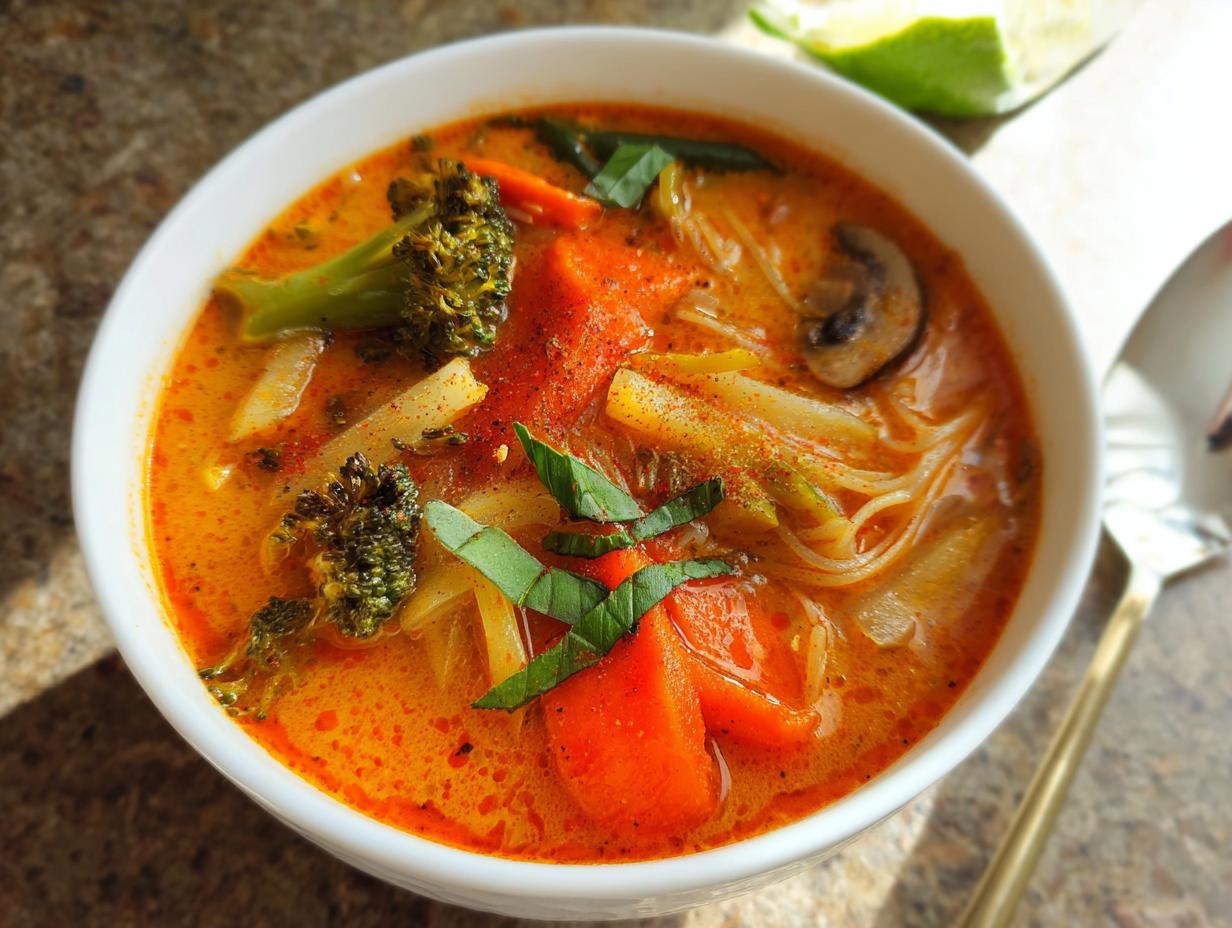
When you need a fantastic, flavor-packed dinner but only have about twenty minutes to spare, these super quick meals are lifesavers. Seriously, who has time for complicated cooking after a long day? That’s why I’m obsessed with this recipe for Thai Red Curry Vegetable Soup. It’s so deeply comforting and wonderfully satisfying for a vegetarian meal. The best part? I noticed how beautifully the vegetables soak up all that incredible curry flavor. Every single spoonful becomes a little experience!
Why You’ll Love This Thai Red Curry Vegetable Soup
Honestly, this soup just hits different when you’re looking for something fast but still feels genuinely homemade. It’s become my go-to speedy weeknight dinner. You’re going to appreciate how easy it is to get such complex, authentic Thai flavors without needing hours in the kitchen.
- It’s outrageously fast! With only 5 minutes of prep and 15 minutes of simmering, dinner is on the table in 20 minutes total.
- It’s completely vegetarian, ticking that box for healthier Asian Cuisine Recipes without sacrificing fullness.
- The texture is unreal—the vegetables are tender but still have a little bite, totally soaking up that gorgeous broth.
- You can practically use any vegetable odds and ends from the fridge. It’s an amazing clean-out-the-crisper drawer meal!
- The aroma while this simmers honestly makes my whole kitchen smell like a street stall. It’s just pure happy cooking in a bowl.
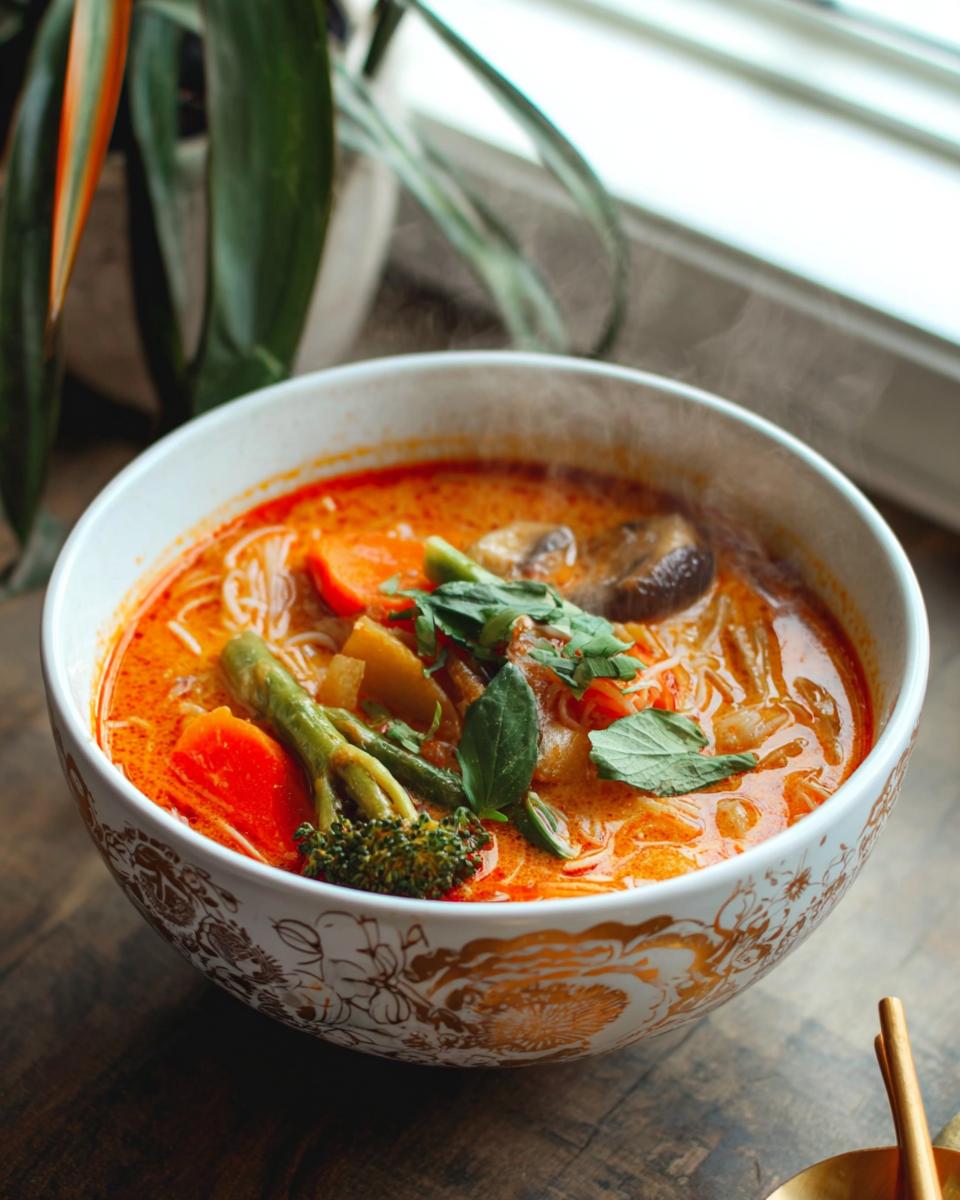
Essential Equipment for Your Thai Red Curry Vegetable Soup
You know I pride myself on using minimal equipment for these quick meals, because who wants massive cleanup? The biggest win here is that you really only need one main item for this Thai Red Curry Vegetable Soup. It’s proof that amazing Asian Food Ideas don’t need a professional kitchen setup.
You will definitely need a good pot. I’m talking about a medium to large pot, something sturdy enough to handle heating up that curry paste without scorching it.
- A Sturdy Pot: I usually reach for my Dutch oven, even though it’s technically overkill for soup this fast! Any pot with a decent heavy bottom will work perfectly, as it helps distribute heat evenly. This stops your red curry paste from sticking and burning when you first bloom it.
- Measuring Cups and Spoons: Essential for getting the broth and coconut milk ratios right. Trust me, if you mess with the ratio too much, the flavor gets muddy fast!
- A Good Stirring Spoon: A wooden spoon or heat-proof silicone spatula is best for scraping up all those delicious bits from the bottom of the pot when you start blooming the paste.
See? That’s it! No pressure cooker needed, no endless array of whisks. Just grab that pot, and we are halfway to one of the easiest Asian Dishes around.
Carefully Selected Ingredients for Thai Red Curry Vegetable Soup
Getting the flavor right in any Asian Food Recipes starts with the ingredients, and for this soup, it’s surprisingly simple list. We are aiming for four servings of pure comfort here, and we only need a few key players to make it happen. I always lay everything out first—that’s my little secret for keeping prep under 10 minutes!
Here’s what you need to gather for this authentic taste of Thailand:
- Oil (1 tbsp): Just a neutral cooking oil to start things off.
- Red Curry Paste (1 tbsp): This is the star, naturally!
- Vegetable Broth (4 cups): The liquid base for our soup.
- Coconut Milk (1 cup): You want the full-fat kind for the best creaminess!
- Mixed Vegetables (1 cup): Make sure this is a happy mix! I always use carrots, broccoli florets, and slices of bell pepper—they hold up so well in the heat.
- Salt (To taste): We want the spice profile to shine, so we save the final seasoning for the very end.
Ingredient Notes and Substitutions for Thai Red Curry Vegetable Soup
Let’s talk about substitutions because sometimes you don’t have exactly what’s written on the list, and that’s fine! If you find your red curry paste is a little too spicy for your liking—maybe the jar didn’t tell you the heat level—you can easily mellow it out by adding a splash more coconut milk or broth when you bring everything to a simmer.
Don’t panic if you only have light coconut milk; it will still be delicious, but it just won’t have that velvety mouthfeel that the full-fat version gives you. Also, feel free to mix up those veggies! Cauliflower, mushrooms, or even some fresh green beans work wonderfully. Just keep the quantity about the same. And regarding salt, if you’re using a pre-made broth, wait until the very end to add extra salt. You might not need any at all! For seasoning salts, check out my thoughts on how different varieties cook, like Kosher Salt vs. Sea Salt.
Step-by-Step Instructions for Perfect Thai Red Curry Vegetable Soup
Okay, this is the satisfying part! You’ve got everything ready to go, which should have taken you about 5 minutes of prep time. Since this soup cooks so fast—really just 15 minutes on the stove—I always tell people to have their bowls ready before they even start heating the oil. It moves quickly! We are going to follow these steps precisely to get that velvety texture and ensure every flavor in the pot really blooms.
We only have five main steps, and it’s all about timing. Trust me, watching the paste bloom first changes everything and unlocks that deep flavor profile you find in the best authentic Thai recipes.
- Heat the oil in your pot over medium heat.
- Stir in the red curry paste until it smells amazing.
- Pour in the vegetable broth and the coconut milk.
- Bring this base mixture up to a gentle simmer and then add all your lovely mixed vegetables.
- Cook until the veggies are tender—usually 12 to 15 minutes—and then season with salt before serving immediately.
Blooming the Curry Paste in Thai Red Curry Vegetable Soup
This first step is non-negotiable for getting that beautiful, rich base flavor. Take one tablespoon of oil and heat it in your pot. Once it shimmers slightly, toss in all one tablespoon of that red curry paste. Now, you stir it constantly for about a minute! You are blooming the spices. When you heat the paste in the oil, you wake up all those aromatic compounds, which releases a huge burst of fragrance into your kitchen. You’ll know it’s ready when it’s deeply fragrant and darker in color, like a rich, spicy mud. If you’ve ever wondered why we sauté aromatics first, this is the perfect example!
Simmering the Base for Your Thai Red Curry Vegetable Soup
Once that paste is singing, it’s time to cool things down just a touch and build the actual soup. Immediately pour in your four cups of vegetable broth and then the one cup of coconut milk. Give it a good, gentle whisk to make sure that beautiful red paste dissolves completely into the liquids. You don’t want any clumps clinging to the bottom!
Now, turn the heat up just enough until you see small, lazy bubbles breaking the surface—that’s a gentle simmer. Don’t let it boil hard! A rolling boil can sometimes cause the coconut milk to split or curdle, and we want creamy perfection here, not soup separated into oil and water.
Finishing the Vegetables in the Thai Red Curry Vegetable Soup
When your broth is just gently simmering, toss in your cup of mixed vegetables—carrots, broccoli, peppers, whatever you chose! They only need about 12 to 15 minutes. Because this is a faster soup, you want them tender but not mushy. Start checking around the 12-minute mark. Poke a piece of broccoli with a fork; if it gives easily, they are done!
Remember that final seasoning step (Step 5)? Once the vegetables are tender, kill the heat. Taste the broth. If it needs a little lift, add a pinch of salt. That’s it! Since we used pre-flavored broth and curry paste, you might find it’s perfectly seasoned as is. If you’re making this for later and freezing it, hold off on the salt until you reheat it the second time around.
Tips for Making the Best Thai Red Curry Vegetable Soup
Even though this recipe is super simple, there are always ways to jazz it up and make it truly *yours*. Think of the 20 minutes we spent as the delicious, comforting foundation, and now we can add those little touches that make it feel like a masterpiece. These little tweaks don’t add much time, but they really boost that authentic Southeast Asian flavor profile.
Here are my favorite ways to customize this quick comfort soup:
Add a Touch of Sweetness and Sour Magic: Thai food thrives on balance, right? The curry paste brings the heat and spice, but it often needs a little lift from sweet and sour notes. As soon as you kill the heat (right after you take the pot off the burner!), stir in about a teaspoon of sugar—any kind works—and the juice of half a lime. It wakes up everything and keeps the flavor bright. I love seeing how a tiny bit of acid changes the whole profile; it’s like magic!
Don’t Skip the Fresh Herbs: If you happen to have fresh cilantro or Thai basil on hand, you absolutely must throw a handful in right at the end. I mean, *right* at the end. You just stir them in, turn off the heat, and cover the pot for two minutes before serving. The residual heat wilts them perfectly, preserving that fresh, herbaceous punch. It makes this feel like a much more elaborate meal coming from my pot.
Boost the Cream Factor: Sometimes, depending on the brand of coconut milk you use, you might want a richer, thicker soup—especially if you’re serving it with rice later. After you finish cooking the vegetables, try removing about half a cup of the simmering broth to a small bowl. Whisk a teaspoon of cornstarch (or arrowroot powder if you prefer) into that amount of cold broth until smooth, then whisk that slurry back into the pot. Let it simmer for just one minute, and it will thicken beautifully. It’s a trick I learned when trying to replicate some of my favorite budget-friendly Asian soup recipes.
What About Protein? Since this is a veggie soup, you might want more staying power! If you’re not strictly vegetarian, adding a block of cubed, firm tofu in Step 3 (when you add the broth) is fantastic. Just make sure you press out as much water as possible first! If you’re used to cooking meat, think about treating tofu the way you might treat chicken when you sauté aromatics before adding the main protein—it helps the tofu soak up the curry much faster.
Serving Suggestions for Your Thai Red Curry Vegetable Soup
Okay, once this gorgeous, fragrant soup is done, we have to figure out how to serve it, right? Because while this soup is totally satisfying all on its own—especially if you’re a vegetarian or just keeping things light—it gets even better with a few simple companions at the table. Think of it as creating a mini, authentic Asian meal!
My absolute favorite way to enjoy this is ladled generously over a bed of steaming hot rice. A simple jasmine rice really helps soak up that delicious, seasoned broth, and it stretches the meal out nicely, too. If you’re interested in different grains that go well with Asian Food Ideas, I put together a little guide on what can I mix with rice for a meal that you might find helpful!
But beyond the rice, the final flourish is all about freshness. You need something bright to cut through the richness of the coconut milk and the savory depth of the curry paste. Don’t skip the fresh herbs if you can help it!
- Fresh Cilantro: A big handful of chopped cilantro sprinkled right on top just before serving brightens up every bite. It adds such a lovely, clean counterpoint to the heat.
- Thai Basil: If you can find Thai basil, use it! The anise-like flavor is totally different from Italian basil and pairs perfectly with red curry.
- A Lime Wedge: Always serve this soup with a wedge of fresh lime on the side of the bowl. A final squeeze of fresh juice right before eating adds that necessary zing and balances everything beautifully. It’s a small step for a giant flavor payoff!
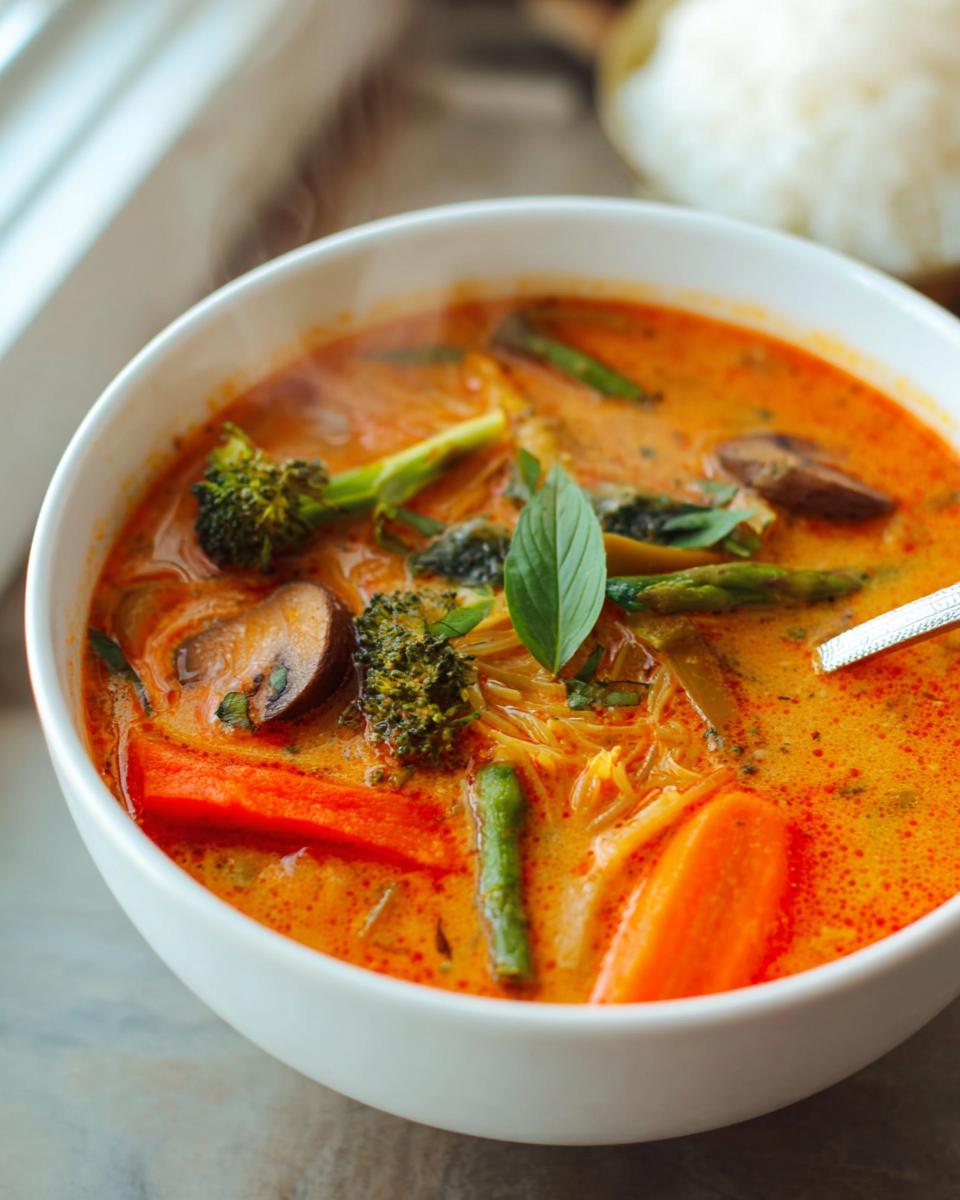
For an even heartier serving, especially if you’re trying to make this into a whole evening spread of Easy Asian Dishes, you could serve it alongside some crispy spring rolls or a simple cucumber salad dressed with rice vinegar. But honestly, even just rice and fresh basil, and you are set to go!
Storage and Reheating Thai Red Curry Vegetable Soup
The best thing about making a simple soup like this is that the leftovers are almost always *better* the next day! All those wonderful vegetables have another night to really marinate in that savory coconut broth. It’s like getting a second, deeply flavorful, easy Asian Food Ideas lunch!
If you’re planning ahead, here’s how I handle storing and reviving this soup so it tastes just as amazing as the first time around.
Storing Your Leftover Soup
Once the soup has cooled down a bit after dinner, get it into airtight containers. Remember how I mentioned not salting it until the very end? That advice is especially helpful for leftovers! It just gives you more control over the final flavor.
You can safely refrigerate this soup for up to three or four days tucked away in the cold part of your fridge. Because it’s full of coconut milk, it might look a little gelled or separated when you pull it out—don’t worry about that at all! That’s just the fat solidifying a bit, which is totally normal.
I’ve also frozen portions, but honestly, I find the texture of the vegetables changes slightly once thawed, so I usually only freeze it if I know I’ll be in a huge rush later. Three days in the fridge is my personal sweet spot for the best texture.
The Best Way to Reheat Your Soup
When you’re ready to enjoy that second serving, forget the microwave if you can! While the microwave is fast for one bowl, the stovetop is much gentler for retaining that creamy texture. We want to treat the coconut milk kindly so it doesn’t separate on us.
Set a pot over medium-low heat. Pour in your refrigerated soup. Now, here is the critical part: Stir it gently and frequently as it warms up. Do not let it boil! We are just aiming for steam rising off the top and a comfortable eating temperature. Low and slow is the secret here for keeping the broth smooth and velvety when reheating.
If you notice the soup seems too thick after chilling (which happens!), just add a small splash of water or extra vegetable broth while it’s warming. Then, give it that final seasoning touch with salt, or maybe a tiny squeeze of lime juice if you want that bright zing back. It’s amazing how just a minute of gentle reheating brings these Easy Asian Dishes right back to life!
Frequently Asked Questions About Thai Red Curry Vegetable Soup
I get so many great questions from readers who are trying out this recipe for the first time, or maybe who are exploring other Asian Recipes Authentic options in their kitchen! Since this is such a flexible dish, I wanted to tackle a few common curiosities right here. Don’t hesitate to reach out if you have more—I love hearing from everyone!
Is this Thai Red Curry Vegetable Soup recipe easily made vegan?
Yes, it absolutely is! The base recipe I gave you is vegetarian because it calls for vegetable broth, but the primary thing you have to watch out for when making any Thai curry vegan is the red curry paste itself. A lot of traditional pastes contain shrimp paste or fish sauce for that umami depth.
When you’re buying your jar, just double-check the ingredients list. If it says “shrimp paste” or “ngapi,” skip that one! Most major grocery store brands now carry vegan-friendly red curry pastes. Once you confirm your paste is vegan, this soup is 100% plant-based heaven! It’s one of the easiest Asian Cuisine Recipes to adapt this way.
What other Easy Asian Dishes can I make with red curry paste?
Oh, you bought a jumbo jar of red curry paste, didn’t you? Been there! It’s super versatile, though. You don’t have to stick to soup! A fantastic option for your next meal is using this same paste base but doubling the coconut milk and broth quantity, and then tossing in some chickpeas and frozen peas toward the end.
You can serve that thicker version over rice for a quick, flavorful curry stew! It’s another one of those perfect Easy Asian Food Ideas that comes together in minutes. You could also mix a little paste with yogurt or mayonnaise for a spicy dipping sauce for homemade samosas or tofu!
Can I use frozen vegetables instead of fresh mixed vegetables?
Absolutely! For soup, frozen vegetables are often a lifesaver. While I love the bright color of fresh broccoli and peppers, frozen mixes work just fine and often save you tons of chopping time. If you use frozen, just add them later in the cooking process—maybe only let them simmer for 8 to 10 minutes instead of the full 15.
Frozen veggies release a lot of water when they thaw, so you want to make sure they don’t get overcooked and mushy in the broth. Taste them around the 8-minute mark. Because these are such Easy Asian Dishes, streamlining the prep using frozen items is completely encouraged!
What temperature should the broth be when I add the vegetables?
You want to add your mixed vegetables right after you’ve blended the vegetable broth and coconut milk and brought the mixture up to a gentle simmer. That means you should see just a few slow bubbles barely creeping to the surface. Don’t let it get into a hard, rolling boil before adding the veggies!
If the liquid is boiling too aggressively, two things can happen: first, the beautiful, subtle flavor of the coconut milk can break or separate, and second, you risk overcooking your vegetables too quickly on the outside before they warm through. A gentle, steady warmth is exactly what pulls the flavor out of the vegetables slowly and perfectly!
Sharing Your Thai Red Curry Vegetable Soup Experience
Whew! Now you have just mastered one of the fastest, most vibrant bowls of comfort you can make in your own kitchen. That’s fantastic!
I really, truly hope you enjoyed making this simple vegetarian Thai Red Curry Vegetable Soup as much as I love making it for my own family. Getting these easy Asian food recipes down pat really changes how you feel about weeknight cooking. It’s all about making great food achievable!
Now, the best part of being a cook is sharing the experience, so I’d love to hear what you thought! Did you add any secret herbs? Maybe you tried it over brown rice instead of jasmine?
Please, please hop down to the comments section right below and leave a quick rating for the recipe. A five-star rating really helps other folks who are hesitant about trying new Asian Cuisine Recipes find this one. And if you snap a picture of your beautiful, creamy bowl, tag me! I love seeing your creations. Share those snaps on social media and tag me so I can celebrate your success! You can find my other quick favorites over at my page for Easy Asian Food.
Happy cooking, friends!
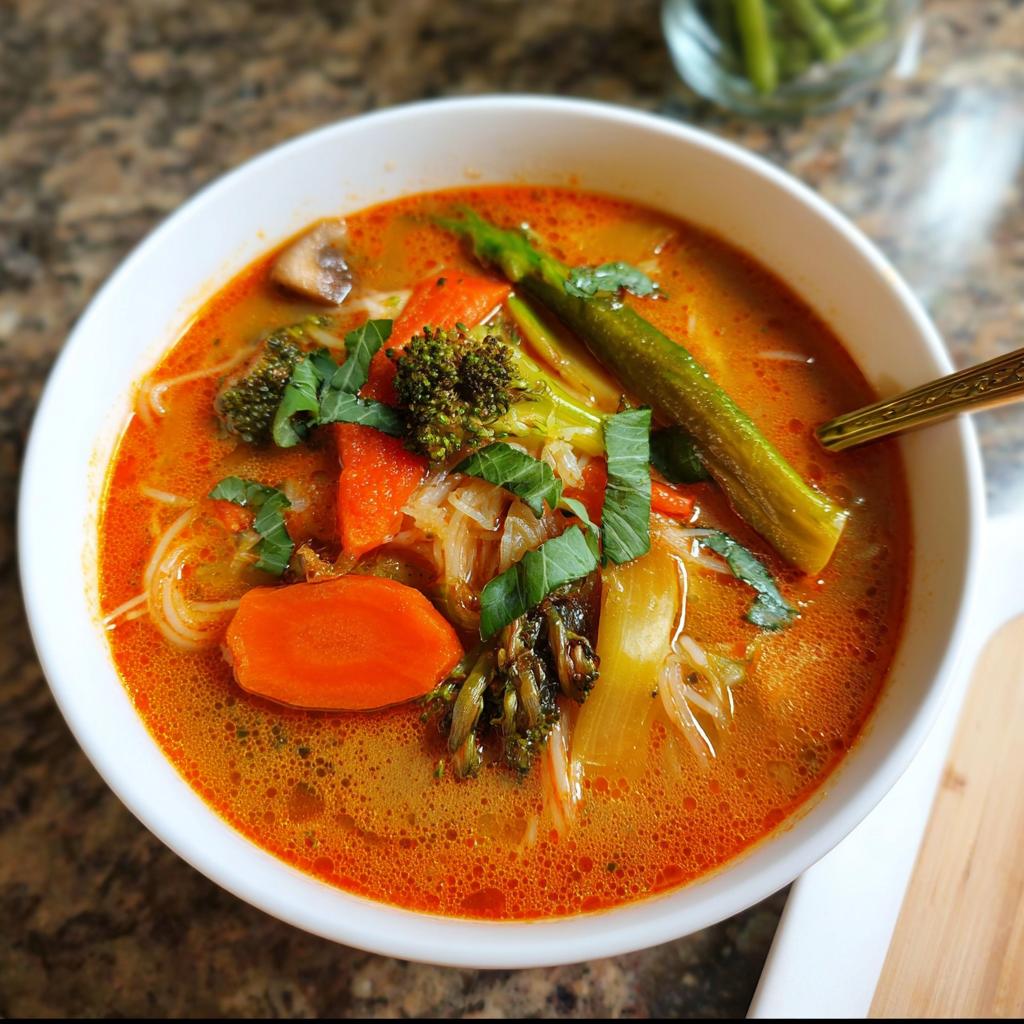
Thai Red Curry Vegetable Soup
Equipment
- Pot
Ingredients
- 1 tbsp oil
- 1 tbsp red curry paste
- 4 cups vegetable broth
- 1 cup coconut milk
- 1 cup mixed vegetables (carrots, broccoli, bell peppers)
- to taste Salt
Instructions
- Heat oil in a pot and stir in the curry paste.
- Add the vegetable broth and coconut milk.
- Bring the mixture to a gentle simmer.
- Add the vegetables and cook for 12 to 15 minutes until they are tender.
- Season with salt and serve the soup.