
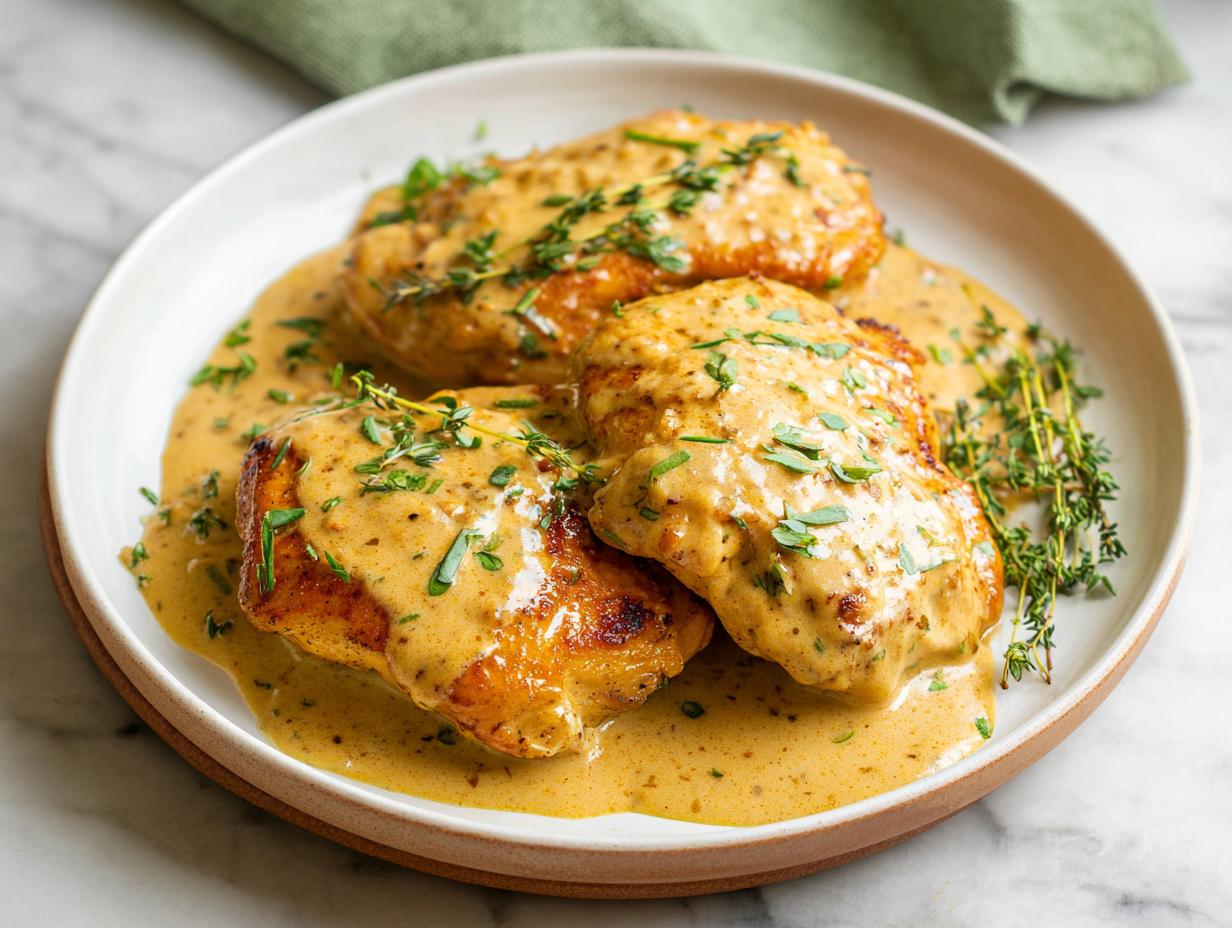
I don’t know about you, but some weeknights I just need dinner on the table, and I need it to taste like I spent hours fussing over it! That’s when I turn to this recipe. It’s my secret weapon for making a restaurant-quality dish in under 30 minutes. Seriously, you grab one pan, and boom—dinner magic happens.
The absolute star here is the sauce; it’s so unbelievably smooth and rich. That’s the heavy cream coming through, but what really makes the flavor sing is the Dijon mustard. It brings this fantastic, slightly tangy depth that cuts through the richness perfectly. Forget boring chicken; this Creamy Dijon Mustard Chicken Skillet is what weeknight dreams are made of. I trust this recipe completely when I’m busy, and it never, ever lets me down.
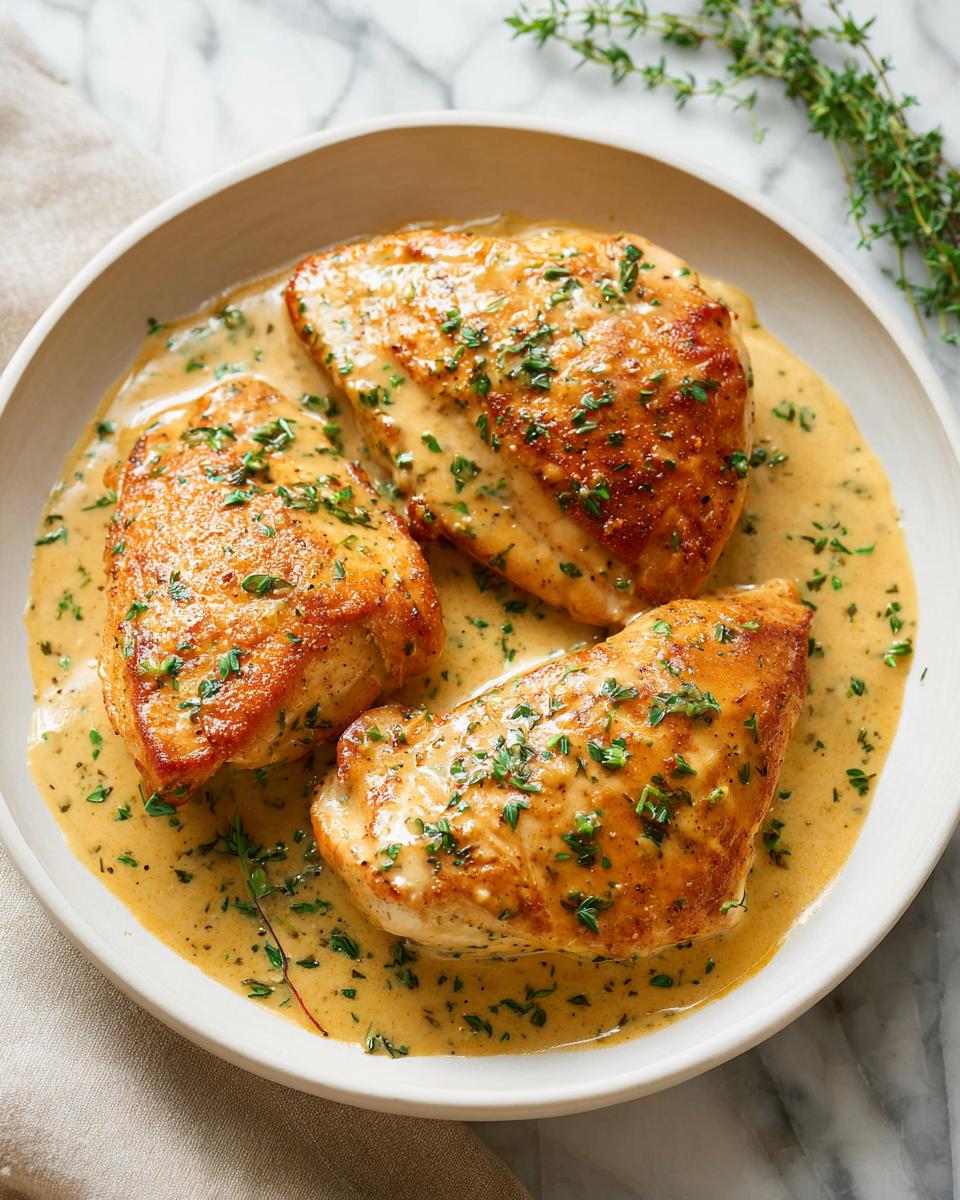
Why You Will Love This Creamy Dijon Mustard Chicken Skillet
Listen, when you need a beautiful dinner fast, this recipe is your ticket. I’ve put together a few reasons why this dish has become a staple in my own hectic schedule. It’s just so reliable!
- It’s lightning fast! You are looking at a total time commitment of maybe 25 minutes. Seriously, it’s quicker than ordering takeout.
- It’s a true one-pan wonder. Cleanup is a breeze, which, let’s be honest, is half the battle on a busy night.
- The sauce! It’s impossibly rich, creamy, and has that perfect little zing from the Dijon that keeps it interesting. No bland chicken here, ever.
- We’re using simple pantry staples. Nothing fancy required, just good quality ingredients coming together beautifully.
- This makes a fantastic {easy family dinner}; even the pickiest eaters usually clean their plates when this is on the menu.
- It’s incredibly versatile. Want to add some mushrooms or spinach? Go for it! It handles extra veggies like a dream.
Essential Ingredients for Your Creamy Dijon Mustard Chicken Skillet
Okay, let’s talk about what you need to pull this off. Since this is such a quick dish, the quality of what you put in really matters. My list is short and sweet, which is part of why I love this so much! You’ll want to pull out your chicken breasts first and slice them right in half lengthwise; this makes them cook faster and more evenly in the skillet. Trust me on the slicing!
Here is what you need to gather up before you even think about turning on the heat:
- 2 chicken breasts, sliced in half lengthwise (to give you four thinner cutlets)
- 1 tablespoon of good olive oil and 1 tablespoon of butter for that perfect sear.
- 2 cloves of garlic, finely minced—don’t even think about using jarred stuff here!
- 1/2 cup chicken broth—this is key for scraping up all those brown bits later.
- 1/2 cup heavy cream for that luxurious texture.
- 2 tablespoons of Dijon mustard. This is where the flavor really pops! If you want to get fancy, you could check out my {other favorite use for Dijon}.
- 1/4 cup of grated Parmesan cheese—freshly grated is always best.
- 1 teaspoon of dried thyme (or fresh if you have it!)
- Salt and pepper to taste, obviously.
Keep all these things measured out and ready to go beside your stove. When dinner is this fast, the 5 minutes of prep time counts!
Equipment Needed for the Creamy Dijon Mustard Chicken Skillet
Don’t let a lack of the right tools slow you down! This dish is meant to be easy, and thankfully, you don’t need a huge arsenal of fancy gadgets. We are really leaning into the ‘skillet dinner’ concept here, so only a few key things should come out of the cupboards.
First and foremost, you absolutely need a good, sturdy skillet. I prefer a 10-inch or 12-inch non-stick or well-seasoned cast iron skillet. A good pan ensures that beautiful golden-brown sear on the chicken without sticking halfway through the cooking process.
That’s really it for the heavy lifters! You’ll also want:
- A sharp knife and cutting board for slicing your chicken breasts and mincing that garlic. A dull knife is an invitation for kitchen disaster, so make sure yours is ready to go!
- Measuring spoons and cups. Since this is a quick sauce, precise measurements for the cream and mustard make the difference between perfection and ‘almost there.’
- A wooden spoon or spatula—something safe for scraping up those flavorful browned bits off the bottom of the pan when you add the broth. Seriously, don’t skip that scraping step!
Gather these items up first. This keeps you organized, and when everything is prepped, going from step one to that gorgeous final sauce is literally a breeze!
Step-by-Step Instructions for the Creamy Dijon Mustard Chicken Skillet
This is where the real magic happens, and it all goes down so fast you’ll barely have time to set the table! Remember, timing is everything when you’re working with quick-cooking chicken breasts. My number one rule for any fast skillet meal is to have everything ready to go before the heat goes on. We move fast, but we move smart!
Preparing and Searing the Chicken
First things first: we season! Don’t be shy with the salt and pepper on both sides of those chicken pieces. After seasoning, heat your olive oil and butter together in that skillet over medium heat. Once the butter is melted and shimmering—not smoking, mind you—gently lay your chicken breasts in the pan.
Now, this is important: let them sit! We want that gorgeous golden crust. Cook them for about 4 to 5 minutes per side. You absolutely want them golden brown. Once they look beautifully seared, pull them out and move them to a plate. They won’t be cooked all the way through yet, but that’s okay; they’ll finish in the sauce later.
Building the Rich Dijon Sauce Base
Next up, lower that heat just a touch. Toss in your minced garlic—we only want it to sauté for about 30 seconds until you can really smell it. Be careful not to burn it, or we’ll be starting over! If you’re ever wondering about the best timing for sautéing things like garlic, you can always {check out my thoughts on sauté times} before you start.
Time to scrape up the flavor! Pour in the chicken broth. Use your wooden spoon to scrape every single little brown bit—the *fond*—off the bottom of the pan. That’s pure concentrated flavor, so don’t leave any behind! Once that’s loosened up, stir in the heavy cream, your two tablespoons of Dijon mustard, the grated Parmesan, and the thyme. Let this simmer gently for about 3 to 4 minutes, stirring now and then, until the sauce starts to look noticeably thicker and velvety. It should coat the back of your spoon nicely!
Finishing the Creamy Dijon Mustard Chicken Skillet
Okay, take a peek at that sauce—isn’t that rich yellow color beautiful? Now, nestle those beautiful, almost-cooked chicken pieces right back into that simmering sauce. Make sure they are spooned over and coated well. We just need to let them finish cooking gently right in the sauce.
Let everything simmer together for about 5 more minutes. You’re turning the chicken over once to make sure both sides get nice and saucy while they cook through completely. When the chicken is juicy and done, you have officially made an incredible Creamy Dijon Mustard Chicken Skillet dinner. That’s it! Dinner is served!
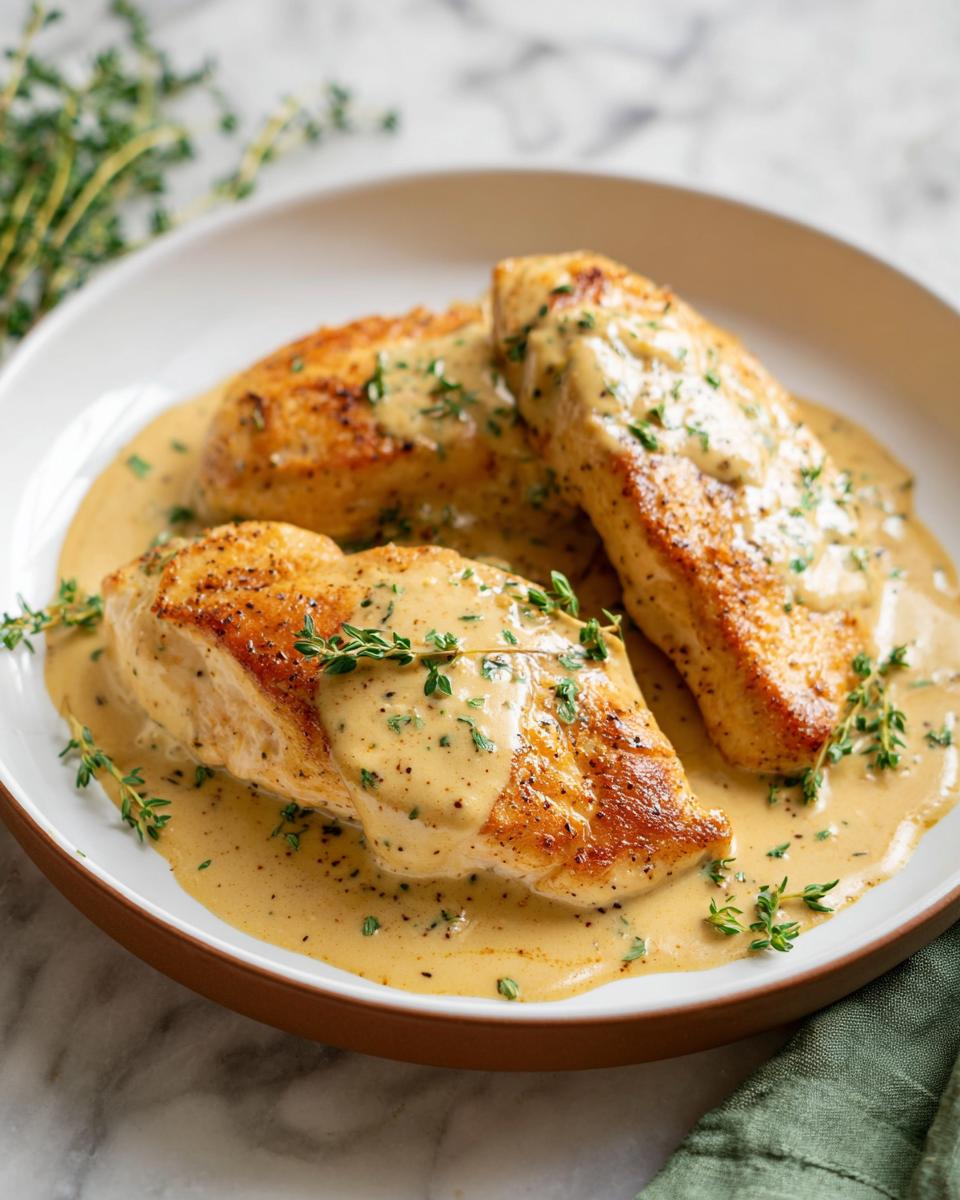
Tips for the Best Creamy Dijon Mustard Chicken Skillet
You’ve already got the recipe, which is the biggest step! But to turn this great dish into an absolutely *unforgettable* creamy chicken dinner, there are a few little chef secrets I swear by. These tips are what move a recipe from “good” to “I can’t believe I made this!”
First, let’s talk about that Dijon mustard. If you can spring for the good stuff—the sharp, grainy kind—do it! Whole grain mustard is lovely, but for this sauce, you want that smooth, classic Dijon. It dissolves perfectly into the cream, giving you that tangy counterpoint without leaving chunky bits where you don’t want them. It truly elevates the whole flavor profile, keeping the sauce rich but light.
Next, we have to talk about the fond. Remember those browned bits we scraped up when we added the broth? That’s the flavor gold! If you rush that step, you’ll lose so much of the savory depth the chicken leaves behind. I can’t stress this enough: use a wooden spoon and work patiently to lift every speck into your broth. It’s the difference between a thin, one-note sauce and a deeply flavorful companion for your chicken. If you ever wonder about when to actually start cooking those aromatics after searing, {I’ve covered the science behind that timing here}.
Finally, watch that chicken like a hawk when it goes back in! Remember, it’s already partially cooked. If you let it sit too long in that simmering sauce, it will turn tough and dry, and nobody wants that. You’re just heating it through and tenderizing it in the sauce—5 minutes is usually perfect for the thinner pieces. If you are worried about overcooking, using chicken thighs instead of breasts helps forgive mistakes, but with breasts, precision timing is key for that perfect, juicy result.
Ingredient Notes and Substitutions for Your Dijon Chicken Recipe
Part of being a good home cook is knowing what to do when you’re staring into your fridge and realize you’re short one ingredient. Don’t panic! This dijon chicken recipe is pretty flexible, but we do have to respect the texture we’re going for—that beautiful, rich creaminess. A few swaps can work, but you have to know the trade-offs!
Let’s start with the dairy, because that heavy cream is doing some heavy lifting in this sauce. If you absolutely, positively, must skip the heavy cream, you can try substituting it with whole milk. However, be warned: milk just doesn’t have the fat content needed to thicken properly, so the sauce will be much thinner. You’ll need to sneak in some help!
To fix thin milk, you’ll need a slurry. Mix about one teaspoon of cornstarch with two teaspoons of cold water until it’s smooth, and then slowly whisk that into your simmering sauce until it thickens up to your liking. I’ve written more about the dairy differences over {when comparing cream to buttermilk}, but honestly, you lose a bit of that ‘velvety’ mouthfeel compared to using the real heavy cream from the start.
What about the mustard? I specified classic Dijon, but if you only have whole-grain Dijon in the house, go ahead and use it! It won’t make your sauce break or anything. The only difference is that you’ll end up with little specks of mustard seed throughout your beautiful sauce. It adds a rustic, slightly stronger mustard bite, which some people love! It makes it look less “fancy restaurant” and more “down-home delicious.” Just know that the consistency will feel a little visually grainier.
As for the Parmesan? Honestly, skip the pre-grated stuff if you can. When you grate your own chunk of real Parmesan, it melts way smoother into the sauce. Those little shelf-stable tubs have anti-caking agents that can sometimes make the sauce just a tiny bit gritty. Trust me, a fresh grate makes a huge difference when you’re making a simple, creamy chicken dinner like this one!
Serving Suggestions for Your Creamy Chicken Dinner
You’ve got this amazing, saucy chicken ready, but what do you put next to it? That’s a huge part of making it feel like a complete, satisfying meal! Because this creamy chicken dinner is so rich and luxurious, you really need something that can soak up all that extra sauce we worked so hard to create. Trust me, letting any of that good sauce go to waste is a crime in my kitchen!
When I make this, my absolute go-to suggestion is always mashed potatoes. There is no better vehicle for scooping up that Dijon cream! Seriously, whip up a big batch of creamy mashed potatoes—maybe even fortify them with a little garlic powder—and spoon that chicken right over top. If you want to try something a bit different, roasted sweet potatoes are wonderful because the sweetness plays so well against the tanginess of the mustard.
If you are trying to keep things lighter, or just want to add a vibrant color to your plate, you need something green to balance out all that richness. Fresh green beans are fantastic. You only need to steam them until they are bright green and tender-crisp. A little drizzle of lemon juice right before serving brightens everything up so nicely.
Here are my top pairings for making this a knockout dinner:
- The Classic Comfort: Creamy mashed potatoes or crusty French bread for dipping.
- The Light and Green: Steamed asparagus or tender-crisp green beans.
- The Grain Option: Fluffy white rice or even some simple egg noodles work great if you want something a little heartier than just potatoes.
And finally, don’t forget the garnish! I know I mentioned thyme in the recipe, but a little sprinkle of fresh thyme leaves right before you serve it truly finishes the look. It adds a little pop of color and a fresh, piney aroma. It signals to everyone at the table that this isn’t just any Tuesday night meal; this is special! You can find tons of great {other ideas for quick dinner pairings} over on my main dinner hub if you get stuck in a rut!
Storage and Reheating Instructions for Creamy Dijon Mustard Chicken Skillet
This Creamy Dijon Mustard Chicken Skillet holds up surprisingly well as leftovers, which is music to my ears on a busy Sunday! Once everything cools down completely, you want to get those leftovers into an airtight container right away. Don’t let that sauce sit out on the counter—it’s too tempting and we need to keep it safe!
You can easily keep this in the fridge for about three to four days. When you’re ready to eat it again, please, please, *please* reheat it gently on the stovetop over low to medium-low heat. If you blast it in the microwave, the cream separates and you get weird, grainy spots. Adding a tiny splash of extra chicken broth or even a little milk while you warm it up on the stove helps keep everything silky smooth, just like the first time!
Frequently Asked Questions About the Creamy Dijon Mustard Chicken Skillet
Can I use chicken thighs instead of breasts for this dijon chicken recipe?
Oh yes, you absolutely can! Chicken thighs are actually more forgiving than breasts because they have a bit more fat, meaning they are much harder to overcook. If you use thighs, make sure they are boneless and skinless, and remember they might need an extra minute or two on each side when you are searing them to get that initial golden color. The final cooking time in the sauce will stay about the same, but thighs bring such a rich flavor to this dijon chicken recipe.
My sauce looks broken/grainy after reheating! What went wrong?
This is the classic problem with any cream-based sauce, and it usually happens when the heat gets too high, too fast. When you reheat, the proteins in the cream contract too aggressively. For the best results when reheating your creamy chicken dinner, use the stovetop on the lowest heat setting possible. And here’s my secret: add a tablespoon or two of liquid—broth, milk, or even water—and stir constantly until it melts back together. Don’t microwave if you can help it; low and slow on the stove is the way to save that beautiful texture!
Can I make this recipe ahead of time?
You sure can prep parts of it ahead, which is great for busy evenings! I always slice my chicken breasts during my weekend prep routine. You can even cook the chicken fully, set it aside, and make the sauce *without* the chicken in it, simmering it until just slightly thinner than you want it. Cool the sauce completely, store it in the fridge, and then gently reheat the sauce the next day. Just before serving, reheat the sauce with the already-cooked chicken to finish the dish together. It keeps your total active cooking time under 10 minutes when it’s time to eat!
What if I don’t have Parmesan cheese? Can I skip it?
You know, Parmesan cheese isn’t just for flavor here; it actually acts as a powerful emulsifier to help stabilize that cream and Dijon mixture, making the sauce thicker and richer. If you skip it, your sauce will definitely be thinner. If you don’t have it, I’d recommend adding a very small dash of cornstarch slurry (about 1/2 teaspoon of cornstarch mixed with 1 teaspoon of cold water) to the simmering sauce to help thicken it up a bit before you add the chicken back in. If you’re looking for more great chicken dinner ideas, check out my guide to {all things chicken}!
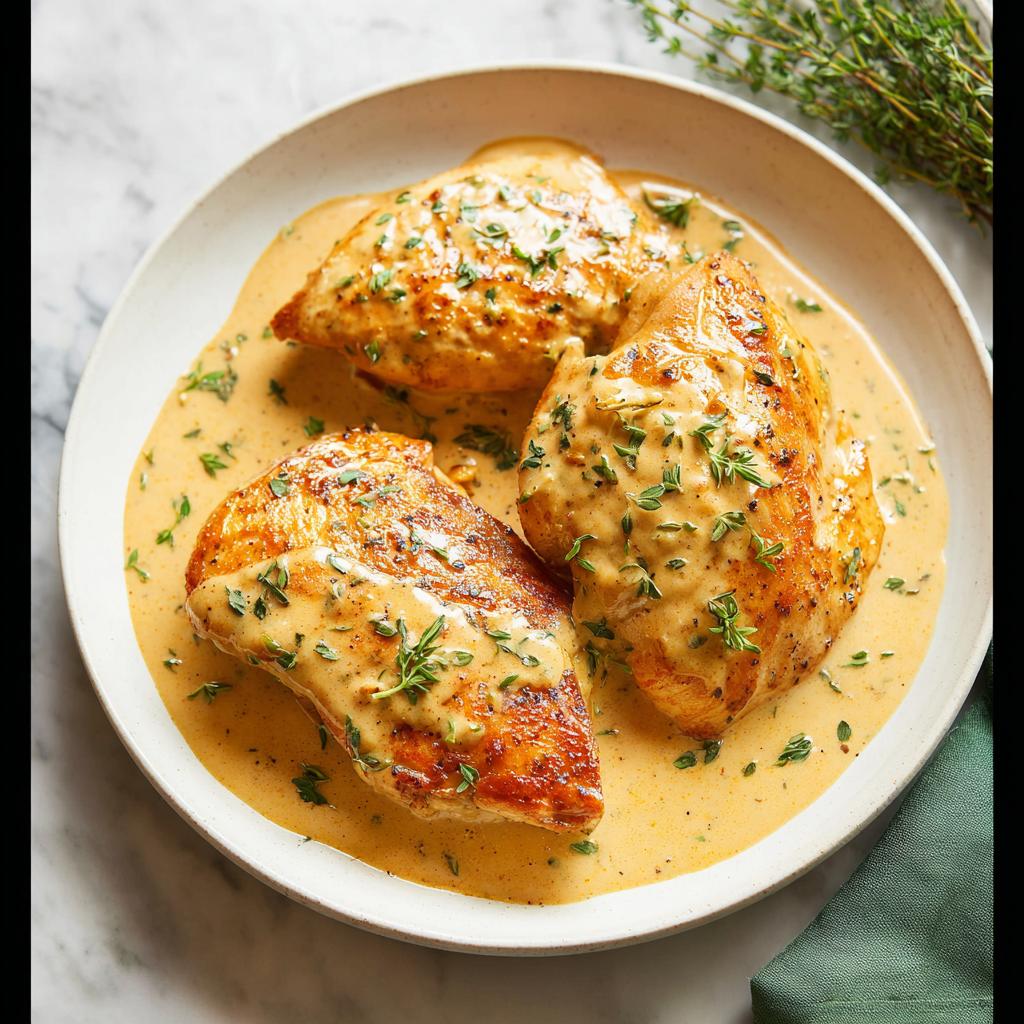
Creamy Dijon Mustard Chicken Skillet
Equipment
- Skillet
Ingredients
- 2 chicken breasts sliced in half lengthwise
- 1 tbsp olive oil
- 1 tbsp butter
- 2 cloves garlic minced
- 1/2 cup chicken broth
- 1/2 cup heavy cream
- 2 tbsp Dijon mustard
- 1/4 cup grated parmesan
- 1 tsp thyme
Seasoning
- to taste salt
- to taste pepper
Instructions
- Season the chicken with salt and pepper.
- Heat the oil and butter in a skillet over medium heat. Cook the chicken for 4 to 5 minutes per side until golden brown. Remove the chicken from the skillet and set it aside.
- In the same pan, sauté the minced garlic briefly. Add the chicken broth and scrape up any browned bits from the bottom of the pan.
- Add the heavy cream, Dijon mustard, grated parmesan, and thyme to the pan. Simmer the sauce for 3 to 4 minutes, stirring occasionally, until it thickens.
- Return the cooked chicken to the skillet. Cook for 5 minutes, turning the chicken to coat it fully in the sauce.